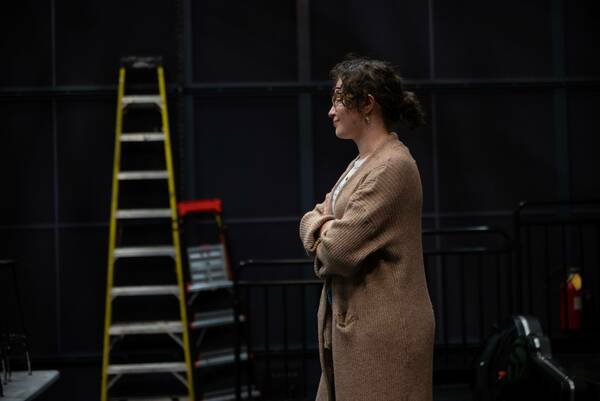
Carolyn Dell, a Film, Television, and Theatre major with a theater concentration, was selected by the Department of Film, Television, and Theatre's Theatre Committee as the 2024-2025 student director in the spring of 2024. The student director opportunity gives a student the chance to direct a production in the department's primary theater season. This opportunity is special in the way that the student director receives the same level of faculty and staff support as if it were a faculty directing the show. The selected student works with all of the FTT design faculty to dress, build, and light the production, while also being advised by directing faculty during the rehearsal process.
This opportunity puts students in the drivers seat of their own production (which the student also pitches during the application process), and allows them to lead their own audition process, rehearsals, and allows them to have creative control over all elements of the production. Dell is the first student to be chosen for this new model of the student directed production and we sat down with her to discuss how the process has been going so far. Take a look at her answers below!
Q: What made you want to apply for the student director opportunity?
A: So, I was really excited. I was in the middle of auditions for A Chorus Line when the application form came out for student directors, and I was kind of deciding ... like, wow, this is a really big project I'm already taking on. I was so excited for this new adventure with A Chorus Line, so I was already kind of in the mindset of trying something new and being excited for a very new thing because it was my first big show with the department.
I saw the application go out and I was like, man, this sounds like a really fun idea. I felt like it was always something I've wanted to try. I did a little bit of directing in high school for my mini senior thesis where I started a mini fundraiser for a scholarship. It was my goal to give scholarships back to younger high school students, and I was like, okay, that was fun, but it really wasn’t for me. It was more to accomplish a goal through the show. So I thought, wouldn’t it be interesting to do a show for me? So I got to thinking, okay, what kind of shows am I really into? So, when I began going through the director application I started reading some shows and reaching out to some faculty to figure out what direction I wanted to go in. The further I got into just considering the student director application I was like, no, this is going to be super fun — I should definitely submit for this.
The faculty were also just so wonderful and really supportive. They gave me advice, helped me with scripts, and I actually got to take some scripts from the script library before it officially reopened. My mindset going into this was that it was a new adventure, new opportunity, but also what really solidified my choice was the faculty being so excited and supportive as soon as I mentioned that I might be interested in directing. They were overwhelmingly supportive, and I think that is what pushed me over the edge.
Q: What was the experience like completing the application and choosing a show to pitch?
A: Oh my gosh, choosing a show was probably the hardest part of this process! Originally, I had this crazy, harebrained idea that I really wanted to do this show that I had seen a mini one act of in a high school competition called Woyzeck. It’s this crazy, dark, gritty story about a soldier being tortured by Nazis and having hallucinations and being ridiculed by his village. He ends up killing his wife in a suicide/murder — crazy, super dark psychological show. And I was like, yes, this is gonna be awesome. It was going to be gritty. It was going to be really dark. I had a vision for this metal/industrial gritty steampunk theme, and then I thought about it after the initial excitement faded and I was like, well, we’ve done a lot of dramas and if I’m going to do this student directed show and my selection is chosen, how am I going to fill out the season?
So, then I was like, maybe this super dark show isn’t the direction to go in. I started thinking more and I was like, okay, logistically, it has a male lead that has to go into a really dark place and it has a lot of minor characters. Do I really want to do a show where it’s a very focused on one person with minor characters, or do I want to do a show that has everyone involved all of the time? With this student directed opportunity, if I got the opportunity to present something, I want everyone to feel really involved — I want everyone to have a challenge and I want them to feel like they’re equally contributing to the process. So, then I pivoted and said, okay, comedy. Comedy has a pretty big cast and it has a variety of characters. Everyone is important in a comedy versus a drama, so let’s explore some comedies!
I started getting into some farces and I had a lot of fun reading them. I came across The Play That Goes Wrong and I was like, oh my gosh, this is the perfect show. It’s a physical comedy, it’s got slapstick comedy, it has a big role for everyone, it has big technical requirements — this would be a challenge for the entire department. So I wrote a fifteen page dissertation about the show going into specific technical elements and how I would execute them, and I recruited kids to be interested in designing parts of it. It was super awesome and wonderful, and so I submitted it and the faculty were like, this is amazing, truly wonderful, but Saint Mary’s has taken the title for their upcoming season already.
I was like NO!!! As an aside, I was able to see the Saint Mary’s production and it was wonderful; I wish that I had been able to see it again because it was so much fun. So I was like, okay, cool, what now? And the faculty said, okay, we love your application, we loved your pitch. Can you find a different show in the same general genre and we can see if it’ll fit in with the season? And I was like, okay, physical comedy farce. Got it.
One of my favorite playwrights for a comedy farce is Ken Ludwig, like, Lend Me A Tenor, Moon Over Buffalo — just like really classic, really funny farces with really big, strong casts of characters. Ludwig’s work fits in with my exact goal and what I wanted to do, so I started reading and stumbled upon The Game’s Afoot or Holmes for the Holidays, and I was like, man, this is a pretty technically complex show with lots of characters. I kept reading and I was like, okay, this is pretty good. It was a pretty classic comedy, and when I got to the end there was a big twist and I was like, oh my gosh! I love this character with the twist and the fact that everyone’s on stage all the time and that we have two very different feeling acts in the show. I read it again and I was like, yeah, this is the show. And then I submitted it and the faculty approved it! Once I was able to get into it more after that I was like, yes, this is awesome and I am so excited. I was a little disappointed that the first show I pitched was unavailable, but now that I have gotten into the process, I've realized that, no, this was definitely meant to be. This was the show that was supposed to happen at this time. It fits the exact vibe I wanted — the rehearsal room is so fun and you have such a good time in rehearsal. We’re all working really hard and having a great time, and it’s like this is the show to facilitate the room I wanted. It was perfect.
So, that was kind of my big arc/journey from tortured soldier drama to a really fun Sherlock farce, but, you know, it only took me a month to figure it out!
Q: After being selected as the student director for this season, you were able to facilitate your own auditions. What was that like? Have you ever done that before?
A: It was so fun! It was also terrifying. It was the very beginning of the process — we had already had a few production meetings and had general concepts and I knew what the show was, but I didn’t have any of the cast of characters to fill it out. The faculty members that I was speaking with were like, casting is going to happen and everything is going to fall into place. And I was like, OH NO, CASTING IS GOING TO HAPPEN AND EVERYTHING’S GOING TO FALL INTO PLACE! This is the most important, vital part of the show!
So, in hindsight, I probably put a little too much weight onto it. Once I got into it I was like, oh, duh, this is auditions — this is great! I’ve worked as a stage manager on several department productions at this point, so I generally know how to run an audition room. However, I’m not usually the person choosing who makes it at the end. I’m just helping to facilitate it. So, I kind of knew the structure and I invited my friend Noah [Sim] to sit with me, which was wonderful. He’s directed a lot of student productions on campus, and so I asked if he wouldn’t mind coming in and sitting with me to observe and give me pointers on how I am handling the auditions as they go. It was really helpful to have someone be able to ask questions on, like, if I want the character Gillette to feel different as Sherlock versus Gillette, what questions should I ask? What verbiage do I have to use to get this actor to get that idea in their head quickly and efficiently?
Also, you, Tre, sat in the room with me as well. Which was so wonderful and helpful because I was terrified of running my audition room by myself with no faculty in the room because it felt like I was just a crazy person sitting in the basement of DPAC, asking people to read me sides. So having you there was so helpful and calming, and it was wonderful to turn over to you after someone walked out of the room and be like, okay, awesome, I think we found our person. It was nice to get this reassurance because I had very strong ideas in my head of like, yes, this is what I want, but having a team to sit with I think is so important when going through the casting process. I was happy to have a team I could trust and bounce ideas off of, like, “I love how this person read for this character, but I also loved person C. Can these people all act together in the same room? Do they have the same types of readings of the character? Should I call this one back and ask them for a different reading to match this or is their reading actually closer to what the show is?” So, having a team to bounce ideas off of, I think, was probably the most helpful part of the audition process.
And all of the auditions were so wonderful! It was awesome because there wasn’t anyone in the room where it was like, oh my gosh, I know exactly who you’re going to be. It was like the process of everyone vying for these parts, and everyone was so prepared that it’s like, man, I really don’t know who’s going to be in these roles. Like, people came in with such fresh and wonderful ideas that it;s like the characters are flushing out during auditions. It was so terrifying, but it was wonderful.
Q: What has it been like to work with the faculty and staff in the Department of Film, Television, and Theatre to develop this show?
A: It has been an amazing experience having the department on my side! I have been banging down office doors and emailing people constantly. Just getting people to come into rehearsal, watch the show, tell me what you think. The faculty have also been giving me recommendations for, like, movies to watch and source material to read, and just provided inspiration in general. It’s just been so helpful because I feel like any time I turn my head and I’m like, man, I’m a little confused, suddenly someone pops up right next to me with exactly what I need to continue! It’s been so wonderful and helpful, and I don’t know how I’m going to fit everyone in the program with all of the acknowledgements I need to give.
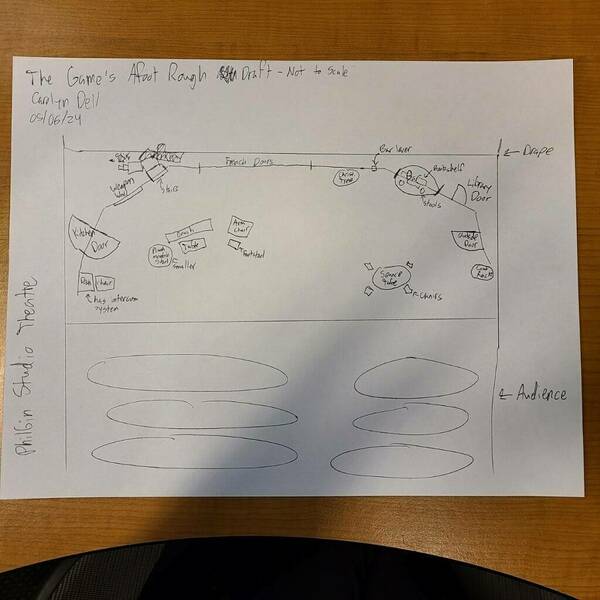
It’s just been amazing — especially right now with our set going up. Like, the walls are up, which is amazing. I had a thought about what the set would look when I submitted the show and sketched it out on a little napkin piece. I actually think it’s still in the production folder in the drive somewhere! I can’t imagine holding up the picture to the set and being like, oh my gosh, this is what I drew but very different; in fact better! It’s almost like magic when you think about it — the set coming to life before your eyes!
This faculty is just so talented and amazing, like, sitting down in meetings with them and then being like, “I have this wonderful idea, I’m really drawn to this, this show is pushing me this way.” It’s also been really fun to be a new director and have that experience because I’m not being totally led along by faculty — I have a lot of autonomy to direct this show as I would like. Of course, I’m not quite sure what’s going on all the time, and then the faculty are there to assist and catch on to ideas or concepts that I present and just rolling with it and improving and extrapolating — it’s just been such a helpful process and gives me such wonderful ideas.
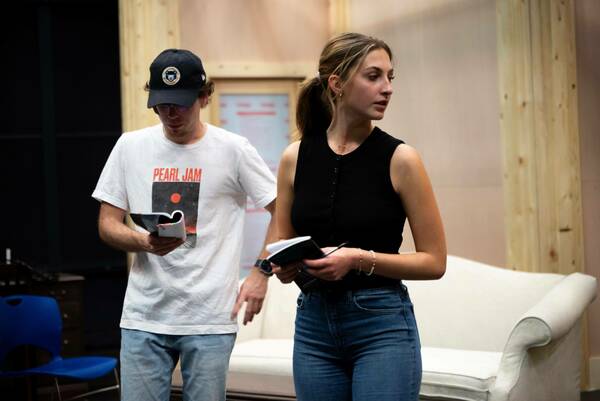
Like Carys Kresny — she is so wonderful. She came into rehearsal a couple weeks ago and presented to me, like, oh, just make sure you know who’s important in this scene . It was just a passing remark and it has been stuck in my head the whole rest of this process. It’s like, oh yeah, one passing word from a faculty member stopping into rehearsal — and there've been multiple faculty members stopping in. Matt Hawkins, he’s been wonderful coming in and shooting some videos and photos. Tre, you’ve been there shooting photos, and it’s just been wonderful to have people in the room who are excited about the work and who are contributing to it. I don’t know who I would ever be able to do this production if I didn’t have faculty support going through it. It’s really a monster of a show in such a good way, and I can’t imagine going through this process and not being able to walk up to a faculty member at the end of class and be like, hey, there’s just something about this scene, can you think about it with me for a second? It has been immensely helpful having the support of the faculty and knowing, like, after this interview, I’m going to sneak down to the Philbin and chat with Kevin — it’s just like, wow, people are reaching out and asking questions, and are excited to provide information.
I don’t really have the word for all of this. … I guess it’s like a blessing. My heart is so happy to have people excited about my little project. At first I was like, yes, me and all my friends and my cast — it’s so exciting. We’re putting on a show and I’m so excited, and then I was like, wait, no, this is a SHOW. Like this thing is happening. It’s not just my creative little idea I’ve been sleeping on for months, so that’s very exciting.
Q: In your opinion, what has been the best thing about this process?
A: Oh my gosh, the best thing about this process? If I had to pick one, well, the first thing that pops into my head was just so silly — it was that we got department provided Chipotle during auditions. And that was just like the start of like, oh my gosh, this is a real show. This is not just me and my harebrained ideas.
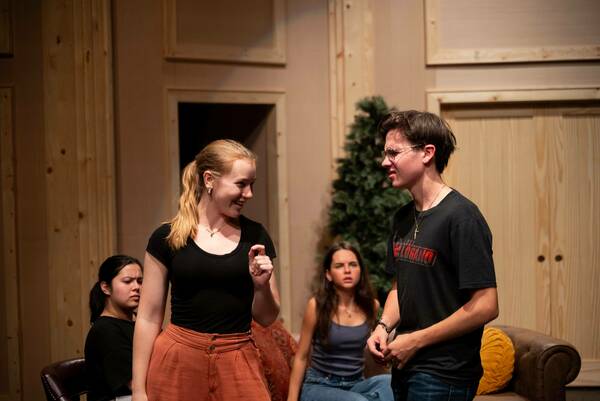
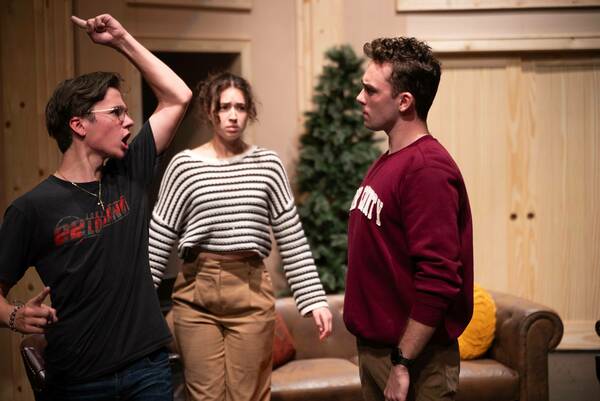
Oh, but probably my favorite part of this process has been just having the cast around. Which, I guess is not specific, but just walking into the room and everyone being so excited to be in the room is just so refreshing. Everyday we come into rehearsal and we do a check in where we say something about our day or something we’re excited about or something they’re doing that didn’t go super well and we want to improve upon it. I think just checking in with the cast everyday has been so helpful and so refreshing and wonderful. The vibe of the room is so good right now. I don’t know who started it (maybe some of the kids who work in the shop), but they’ve started this little phrase that goes, “if the game is afoot, then the foot is a (blank), so then it must be (blank).” And so, for example, I go, “let’s restart from the top,” and they go, “ well, if we’re restarting from the top and the top is a foot and the foot is the top than we’re starting from the top.” It’s just these crazy things that don’t quite make sense, but it’s just refreshing to see people excited about the work and coming in everyday ready to work hard.
It’s just the dedication of the cast, I guess is the one thing. The dedication of the cast is so immense, and I think it’s probably my favorite part.
Q: Conversely, what has been the most challenging part of developing the show?
A: Gosh, I would say probably the most challenging part about developing this show…it’s a funny, funny show when it’s written down, but it’s very witty humor. I think the hard part is finding out, like, with me and my cast, okay, this one scene, we’re talking about really, really devastating, sad character development, and then we flip the page and three lines later we’re having a really bad sexual innuendo joke. How do we get from A to B? How does that happen? I think that the most challenging part is just figuring out, like, how to navigate the script. It’s such a complex piece, which is so wonderful, and Ludwig is awesome at creating these really wonderful shows, but it’s so difficult as a director to be like, man, we’re showing you this emotional moment and then this really funny bit happens. How do we get there? Like, someone enters a scene and it’s totally different.
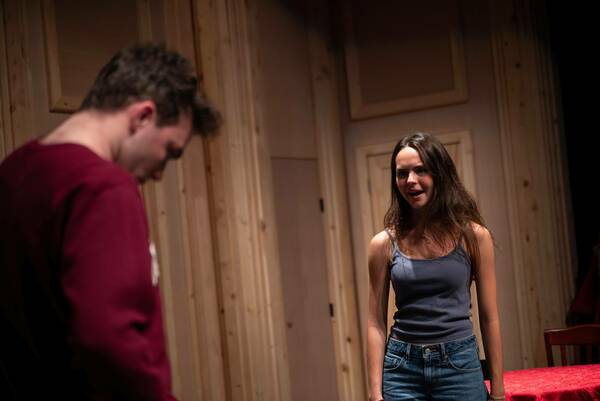
So it’s like, how do I keep that going without this turning into a straight drama? Because it's a farce, but you could take several scenes from this show and toss it into one of your really serious drama pieces and it would fit perfectly. So, I think the most challenging part is just like really crunching it out with the performers and being like, oh my gosh, that’s a really dark place. Like, your wife has been dead for ten years? WHAT? How are we going to get over there now? So I think that’s probably been the most challenging part and something we’re really working through and digging through. This process is definitely just the arc of the show of dramatic and comedic and finding this place where both shine through.
Q: Would you recommend this experience to other students who are thinking about applying for the student director opportunity? If so, what advice would you give them?
A: Oh my gosh, I would definitely recommend it to other students…unless I decided to do it again then let me be the only application so I get it! But I would definitely recommend this to other students. Advice I would have is just be accepting of any ideas that come into your head, because, like I said earlier, I was going to do a really, really, dark show and now I’m doing a crazy farce. I think just not coming in with the idea that “this is the show I want to do and if I don’t do this show, I won’t do it.” I think coming in with an idea of what you want to accomplish as a director is a good place to start. Do I want to have an experience where I’m stretching myself out of my comfort zone? Do I have a goal for the department that I want to achieve with this show? Do I have a goal for myself? I think just stretching yourself through the application and finding something new through it is something I would recommend to people applying. I chose my really comfortable piece, and now I have this awesome, wonderful show where it’s like I can’t imagine another show in its place. So I definitely think just stretching yourself with the application is something important.
Q: Finally, what should audience members expect when heading into this production?
A: Expect to laugh! Expect a really fun show that’s just very different from the other FTT shows this season. Expect to walk into a heartwarming story and laugh and giggle and be like, wow, that was a runaway train. I have no idea where it was going, and then it finally crashed and I loved to watch it.
Ken Ludwig's The Game's Afoot or Holmes for the Holidays takes the stage in the Philbin Studio Theatre from Wednesday, Nov. 20 to Sunday, Nov. 24. Get your tickets today at performingarts.nd.edu.
Originally published by at ftt.nd.edu on November 12, 2024.